Structural Drying and Dehumidification in Acworth
After extraction, a room can look ready for repair while its materials still hold water. Structural drying follows that remaining moisture through measured locations, controlled airflow and adjustments to the drying environment.
(888) 532-4616Discuss retained building moisture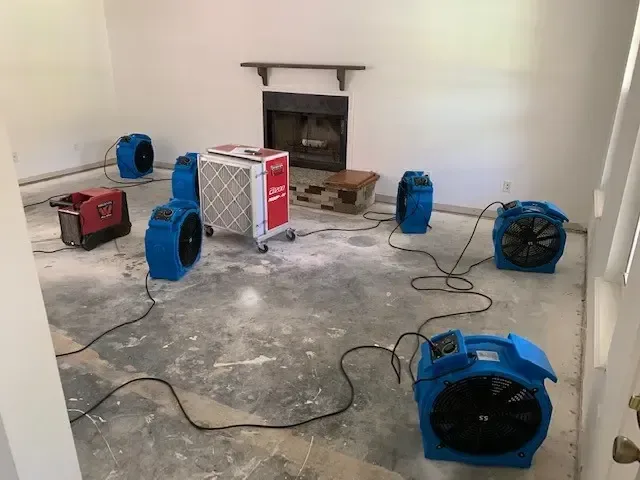
Professional attention for structural drying and dehumidification
Rapid local response
The response team treats active water movement as urgent. Dispatch records the source, affected rooms and safe entry conditions so the extraction plan starts with the actual problem.
IICRC S500 drying standard
The drying team measures wet materials against a dry reference, manages evaporation with extraction and dehumidification, and adjusts equipment as readings change through the drying cycle.
Claim-ready documentation
The restoration technician records visible damage before removal, maps concealed moisture and maintains dated progress notes. That record separates emergency mitigation work from subsequent plumbing or building repairs.
Local water experts
The inspection follows the route water took through the property. Floor transitions, wall cavities and concealed layers receive attention even when the visible puddle occupies only a small area.
First steps for structural drying and dehumidification
Confirm the leak status
Describe the completed source repair and any moisture that has reappeared since then. An ongoing release needs attention before drying can reliably reduce the building's retained water.
Keep measured surfaces accessible
Avoid covering damp floors with rugs or placing storage against affected walls. The assessor needs to reach representative locations and compare them throughout the drying work.
Describe room use constraints
Identify occupied bedrooms, access routes and equipment concerns before the setup is arranged. Safe passage and the drying footprint need to be considered together within the property.
Retain the progress record
Keep photographs, material readings and scope changes together. These records help explain why equipment remains, why its arrangement changes and what the next repair contractor needs to know.
What does structural drying and dehumidification cost in Acworth, GA?
Acworth structural drying costs reflect the materials holding water, cavity access and monitoring needed to demonstrate progress. The scope should identify equipment and inspection tasks separately from source correction, material disposal and replacement finishes after the drying stage.
Contained accessible assembly
$1,000 to $2,200
- Defined material footprint
- Open measurement access
- Focused equipment placement
Several rooms or cavities
$2,200 to $4,500
- Multiple moisture checkpoints
- Additional cavity exposure
- Broader humidity management
Dense or extensive wet structure
$4,500 to $7,000+
- Complex retained layers
- Expanded monitoring needs
- Adjusted drying arrangements
Water category, wet area, material class and the delay before drying shape the scope. The water damage cost calculator provides an estimate only.
Documentation for your insurance claim
The claim file contains a moisture map, daily psychrometric logs, timestamped pre-demolition photos and a line-item scope. The restoration team records the water category and affected material class. Sudden accidental leaks, outside flooding and sewer backups can receive different treatment under a policy. The policyholder checks coverage and deductibles with the insurer before assuming any payment.
How structural drying and dehumidification is handled
The restoration plan follows the source, the wet materials and the measurements taken through each stage.
Establish comparable starting readings
The assessment records affected materials and measurement locations after source control and liquid removal. This starting map distinguishes retained moisture from surfaces already outside the wet footprint.
Arrange airflow and humidity control
Equipment placement follows exposed surfaces, room conditions and access limits. The plan accounts for occupied spaces while giving suitable wet materials a controlled environment for moisture release.
Reassess the drying response
Repeated measurements reveal progress and stalled areas. The setup changes when readings indicate blocked access, concealed water or another condition preventing the retained assembly from drying effectively.
Explain the completion decision
The handoff connects final material condition with the original moisture map. It identifies removed layers, source work and any preparation still required before the next contractor installs new finishes.
More about structural drying and dehumidification in Acworth
Drying equipment is useful when its placement serves a measured material problem. A fan facing a wall cannot describe what remains behind that wall. Acworth structural drying should begin with the source status, the affected assembly and a map of readings that can be compared as moisture leaves the building materials.
Start with the building rather than a fixed equipment package
The 2020 census recorded 9,507 housing units in the city. Each affected property still presents its own material arrangement, from accessible floor edges to enclosed cavities. A home near McCall Primary School and a building near Cobblestone Golf Course should receive drying decisions based on the assemblies inspected inside them.
- Identify the materials that can remain after damage and contamination decisions.
- Mark measurement locations where retained moisture is greatest or hardest to reach.
- Record access limits that may prevent effective airflow through the wet assembly.
Room humidity and material moisture provide different information. Dehumidification manages the surrounding air while directed airflow supports evaporation from exposed surfaces. The setup should account for both, including the effect of open doors, blocked equipment and cavities that have not yet been made accessible for inspection or drying.
Respond when a wet layer stops making progress
A stable reading may indicate trapped moisture, poor access or a continuing water source. Simply adding more equipment to the visible room may leave the underlying problem untouched. The assessor should revisit the material path, check adjacent layers and explain any proposed opening before expanding the drying footprint or changing the work scope.
- Compare readings at consistent locations instead of relying on a single dry-looking spot.
- Recheck the source when moisture returns to an area that had improved.
- Adjust the equipment arrangement when furnishings or room use obstruct airflow.
For a property near Logan Farm, occupied room access may influence the setup as much as the wet footprint. Safe passage and usable dry spaces need to remain clear. Water extraction should address reachable liquid first, allowing drying equipment to focus on moisture retained within suitable materials rather than open puddles.
Water still affecting the floor?
A room that looks clear may still need a measured drying plan. Describe the materials affected, completed source repairs and any access restrictions so the assessment can establish useful moisture checkpoints.
(888) 532-4616Discuss the drying measurements neededTurn the measurements into a useful repair handoff
The final drying record should state what was measured, where access was created and what materials were removed. A finish contractor then has context for preparing the exposed assembly. Any remaining source repair or inaccessible moisture concern should stay visible in the record instead of disappearing when the equipment leaves the room.
- Identify the retained floor, wall or framing layers covered by the drying scope.
- Explain the basis for removing equipment from an affected area.
- Separate moisture treatment from the installation requirements of new finish materials.
Do not move or switch equipment without coordination
Changing equipment placement can disrupt the drying arrangement or create unsafe cords across occupied areas. Keep outlets and units clear of water, belongings and blocked airflow. Report noise, heat or access concerns so the setup can be adjusted while preserving the monitoring plan.
Structural drying and dehumidification in Acworth
The drying assessment needs access to affected rooms and any connected cavities. Describe occupied areas, power constraints and materials already removed so the initial measurements can reflect the current state of the building.
The same service nearby: structural drying and dehumidification in Lithia Springs, Hiram, Villa Rica.
Related water damage services in Acworth
Structural Drying and Dehumidification questions
Talk through the wet areas
A room that looks clear may still need a measured drying plan. Describe the materials affected, completed source repairs and any access restrictions so the assessment can establish useful moisture checkpoints.
(888) 532-4616Discuss the drying measurements neededWhy are readings needed if the floor feels dry?
Touch describes only the accessible surface. Moisture can remain in backing, subfloor material or nearby wall edges. Measurements at selected locations provide a more useful picture of the retained water and whether the drying arrangement is making progress.
Does more equipment always mean faster recovery?
Equipment must suit the material, access and room environment. Extra fans cannot resolve every concealed wet pocket or ongoing leak. The drying plan should respond to measurements and explain why a different placement or opening is needed.
Can occupants switch units off during quiet hours?
Equipment changes should be coordinated with the drying assessment. Interrupted operation affects the conditions being monitored. If noise, heat or access becomes difficult, report the concern so the arrangement can be reviewed alongside the material readings.
What makes a reading stop improving?
Possible causes include restricted access, moisture trapped behind a finish or continuing source water. The assessor should investigate the material path and equipment conditions. The response should address the finding rather than simply extending the same unchanged setup.
Is dehumidification the same as water extraction?
Extraction removes accessible liquid. Dehumidification manages moisture in the surrounding air as retained water leaves suitable materials. These tasks serve different stages of recovery and may be combined with selective opening where a covering prevents effective drying.
What should the finish contractor receive afterward?
A useful handoff identifies affected materials, removal areas and the drying measurements supporting completion. It also notes unfinished source work or preparation needs. That record helps the contractor evaluate the exposed assembly before installing replacement flooring or wall finishes.
Let material progress shape the repair handoff
Documented readings and explained equipment changes help show what remains wet and what can move forward to the next stage of property repair.
(888) 532-4616Arrange retained-moisture assessment