Structural Drying in Villa Rica
An empty floor can still sit above wet construction. Structural drying identifies the materials holding moisture, creates a suitable drying path and checks their response before replacement finishes conceal the assembly.
(888) 532-4616Discuss the remaining material moisture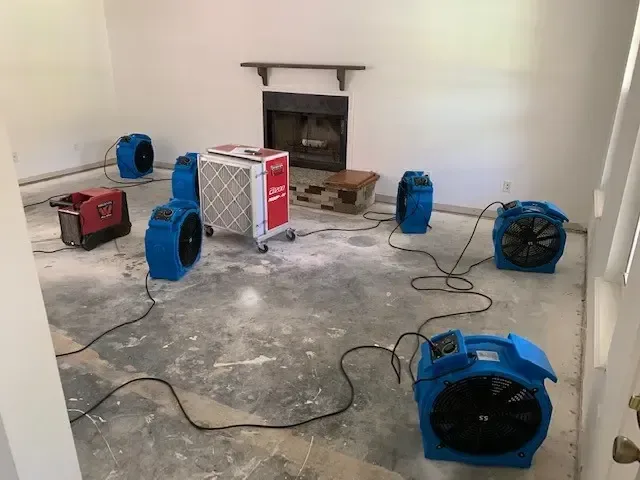
Professional attention for structural drying and dehumidification
Rapid local response
The response team treats active water movement as urgent. Dispatch records the source, affected rooms and safe entry conditions so the extraction plan starts with the actual problem.
IICRC S500 drying standard
The drying team measures wet materials against a dry reference, manages evaporation with extraction and dehumidification, and adjusts equipment as readings change through the drying cycle.
Claim-ready documentation
The restoration technician records visible damage before removal, maps concealed moisture and maintains dated progress notes. That record separates emergency mitigation work from subsequent plumbing or building repairs.
Local water experts
The inspection follows the route water took through the property. Floor transitions, wall cavities and concealed layers receive attention even when the visible puddle occupies only a small area.
First steps for structural drying and dehumidification
Describe prior water work
Explain whether the source has been corrected and accessible water removed. Include any wall openings or material disposal already completed so the remaining drying task is clear.
Identify retained finishes
List the floor coverings, wall surfaces and exposed framing that became wet. Changes such as swelling or separation help identify locations needing closer material assessment.
Keep equipment access available
Leave the proposed drying area clear of movable dry contents when safe. Discuss occupied routes so equipment placement can reach materials without blocking necessary passage through the property.
Request a progress explanation
Ask which materials will be measured and how the results affect equipment changes. A readable record should connect the setup to the surfaces awaiting repair or closure.
What does structural drying and dehumidification cost in Villa Rica, GA?
Structural drying costs in Villa Rica depend on retained material density, available access, the wet footprint and equipment needed to control moisture. Removal of damaged finishes and later reconstruction should be identified separately from the monitored drying scope.
Contained accessible assembly
$1,000 to $2,200
- Defined wet materials
- Open drying path
- Focused equipment arrangement
Several rooms or cavities
$2,200 to $4,500
- Multiple monitoring locations
- Additional cavity access
- Broader moisture control
Dense or extensive wet structure
$4,500 to $7,000+
- Complex material response
- Expanded equipment needs
- Detailed progress assessment
Water category, wet area, material class and the delay before drying shape the scope. The water damage cost calculator provides an estimate only.
Documentation for your insurance claim
The claim file contains a moisture map, daily psychrometric logs, timestamped pre-demolition photos and a line-item scope. The restoration team records the water category and affected material class. Sudden accidental leaks, outside flooding and sewer backups can receive different treatment under a policy. The policyholder checks coverage and deductibles with the insurer before assuming any payment.
How structural drying and dehumidification is handled
The restoration plan follows the source, the wet materials and the measurements taken through each stage.
Establish initial conditions
The assessment identifies suitable retained materials and records their moisture state. Source control and prior extraction are reviewed so drying begins with a defined task and measurable locations.
Build the drying environment
Equipment placement and access methods are selected around the assembly. Air movement and dehumidification work together while the room arrangement accounts for occupied paths and retained contents.
Measure and adjust
Repeated readings show how the affected construction responds. Slower areas receive renewed inspection, and the setup changes when access, airflow or continuing moisture prevents useful progress at a location.
Document material readiness
The handoff describes the final condition of monitored materials and the remaining finish work. Replacement surfaces should follow the requirements of the receiving assembly and the products being installed.
More about structural drying and dehumidification in Villa Rica
Drying a Camden Lake room begins with the materials that actually became wet. A finished floor, wall cavity and exposed framing may respond differently even within the same space. After extraction and source control, the assessment identifies which materials are suitable to retain and how moisture can leave them. Equipment then serves that defined assembly rather than an arbitrary room size.
Set a material baseline before choosing equipment
Initial moisture readings document the affected areas and useful comparisons within the building. Room temperature and humidity describe the surrounding air, while material readings address the construction itself. Both inform the setup, and checks within concealed floor layers or wall bases establish whether those materials are ready for replacement finishes to cover them.
- Record the material type at each monitoring position rather than a generic room label.
- Identify coverings that restrict access to the wet surfaces beneath them.
- Separate damaged materials requiring removal from suitable construction planned for retention.
Downtown Villa Rica contains historic shops and restaurants. Their interior finishes and access arrangements need individual assessment during drying. Existing surfaces may limit where equipment can sit or where a cavity can be opened. The plan should explain those decisions clearly while keeping occupied routes and business contents outside the active work area.
Give retained moisture a workable exit path
Air movers direct air across exposed wet materials, and dehumidification removes moisture from that air. The arrangement must match the assembly and available access. A powerful machine in an open doorway may do little for a closed cavity. Selective removal or another access method can be necessary when finishes prevent useful contact with the material that remains wet.
- Position airflow for the wet assembly without obstructing required room access.
- Manage doors and openings according to the intended drying environment.
- Reassess concealed edges that respond more slowly than exposed material surfaces.
Wicks Tavern is a Dutch-style timber-framed building. At an affected property with retained wood construction, moisture measurements help track conditions within that material. Other inspected assemblies may require different methods or access. The drying record should identify the actual construction and explain why equipment changes occur instead of treating every room as the same collection of surfaces.
Water still affecting the floor?
A room without puddles may still contain wet construction. Describe the original release, exposed materials and current equipment so the assessment can focus on what remains to be dried.
(888) 532-4616Review the retained material conditionsUse progress to decide what happens next
Monitoring should show whether the selected arrangement is working. If material readings stop improving, the assessment may need to revisit hidden water, restricted airflow or continuing entry. Simply leaving equipment longer does not answer those questions. A clear update explains the remaining wet locations and any access or equipment change needed to reach them.
- Compare readings from consistent locations as drying progresses through the assembly.
- Record adjustments when a material or cavity is responding too slowly.
- Check receiving surfaces before new flooring, insulation or wall finishes are installed.
The water extraction service addresses the liquid removal that often precedes this work. Structural drying has a different endpoint: the condition of the retained materials. The final handoff should identify completed monitoring and outstanding repair surfaces so the next trade can work from a suitable assembly rather than a merely dry-looking room.
Keep the drying setup in its intended arrangement
Moving equipment, opening unrelated areas or switching machines off can change how the setup performs. Occupants should report access or noise concerns so adjustments can be planned. Keep cords and air paths clear, and avoid touching electrical equipment from wet flooring. Any equipment fault needs attention before operation continues.
Structural drying and dehumidification in Villa Rica
Villa Rica drying assessments can address downtown business interiors and homes in Camden Lake or Reid Plantation. Describe the water event, materials exposed and any equipment already operating in the affected rooms.
The same service nearby: structural drying and dehumidification in Lithia Springs, Hiram, Union City.
Related water damage services in Villa Rica
Structural Drying and Dehumidification questions
Talk through the wet areas
A room without puddles may still contain wet construction. Describe the original release, exposed materials and current equipment so the assessment can focus on what remains to be dried.
(888) 532-4616Review the retained material conditionsWhy measure materials instead of just room humidity?
Humidity describes moisture in the air, while the building can retain water inside its layers. A room reading therefore cannot replace checks on affected construction. Combining environmental information with material measurements helps determine whether the drying arrangement is reaching its target.
Can all wet materials be saved by drying?
Some materials have lost strength, shape or attachment, and contamination can also affect retention. Those conditions require assessment before drying is selected. The plan should identify suitable materials to retain and explain removal decisions for components that cannot remain in service.
What if the surface feels dry to the touch?
Touch mainly describes the exposed surface. Moisture can remain within wood, behind a wall covering or beneath flooring. Suitable measurements and inspection access help establish the condition of those layers before a repair closes the assembly or a new finish is installed.
Should windows be opened while equipment operates?
The drying environment should follow the planned setup. Opening windows can change temperature and moisture conditions, affecting equipment performance. Occupants should discuss ventilation or comfort concerns so any adjustment supports the material drying work rather than undermining its intended conditions.
How are slow drying areas handled?
A slower response calls for inspection of access, material characteristics and possible continuing moisture. Equipment may need repositioning or the assembly may need additional opening. The progress record should explain the reason for those changes and which remaining surfaces require attention.
When can replacement flooring be installed?
The receiving surface needs appropriate material checks and must meet the requirements for the flooring system being installed. A dry-looking room alone is insufficient. The handoff should connect final drying observations with the next trade's preparation and installation requirements.
Base the repair handoff on measured construction
A documented drying plan explains equipment choices, remaining wet areas and the conditions needed before finishes close the affected assembly again.
(888) 532-4616Discuss a measured drying plan