Commercial Water Damage in Lithia Springs, GA
The commercial restoration team assesses water movement, building systems and occupied areas before setting work zones. Extraction and drying proceed around a documented scope, with access decisions shared with the property representative.
(888) 532-4616Assess the wet business space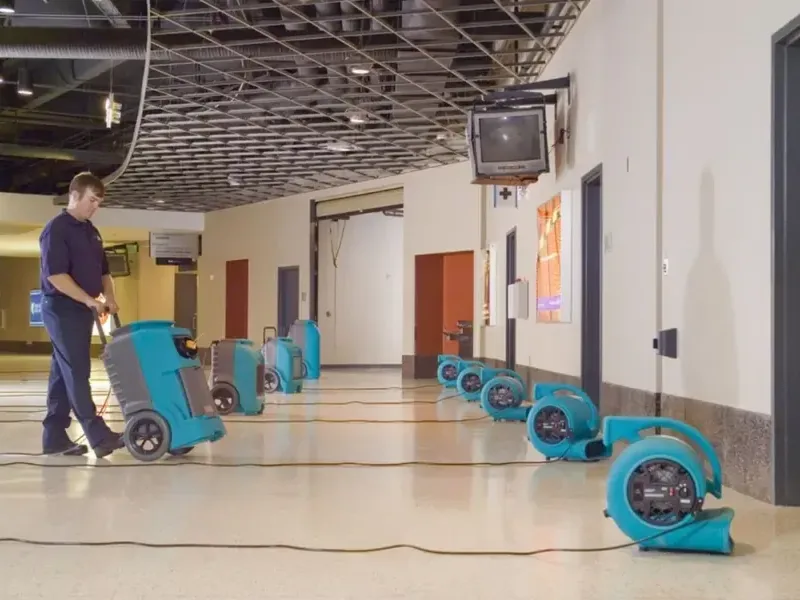
Professional attention for commercial water damage
Rapid local response
The response team treats active water movement as urgent. Dispatch records the source, affected rooms and safe entry conditions so the extraction plan starts with the actual problem.
IICRC S500 drying standard
The drying team measures wet materials against a dry reference, manages evaporation with extraction and dehumidification, and adjusts equipment as readings change through the drying cycle.
Claim-ready documentation
The restoration technician records visible damage before removal, maps concealed moisture and maintains dated progress notes. That record separates emergency mitigation work from subsequent plumbing or building repairs.
Local water experts
The inspection follows the route water took through the property. Floor transitions, wall cavities and concealed layers receive attention even when the visible puddle occupies only a small area.
First steps for commercial water damage
Name the property contact
The business identifies the person authorized to grant access and approve emergency work. The crew records tenant and owner coordination needs before opening building finishes.
Restrict unsafe areas
Staff and visitors stay clear of wet electrical equipment and slippery or contaminated floors. The property representative maintains safe circulation outside the restoration work zone.
Protect movable stock
Dry inventory moves only through a safe route. The crew documents affected contents and avoids transferring wet packaging or debris into clean storage areas.
Retain operating records
The owner keeps source-repair findings, initial photographs and relevant expense records. The restoration team supplies the physical mitigation record for later policy and business review.
What does commercial water damage cost in Lithia Springs, GA?
Commercial water damage mitigation in Lithia Springs may range from $2,000 to $15,000 or more for smaller business losses. Area, contamination, access, contents handling and drying complexity determine the scope; large buildings require an individual assessment.
Contained business area
$2,000 to $4,500
- Localized extraction
- Protected access route
- Initial drying records
Multiple work zones
$4,500 to $9,000
- Partition moisture checks
- Contents coordination
- Expanded equipment setup
Complex interior loss
$9,000 to $15,000+
- Larger material removal
- Restricted work access
- Extended monitoring
Water category, wet area, material class and the delay before drying shape the scope. The Lithia Springs water damage cost calculator provides an estimate only.
Documentation for your insurance claim
The claim file contains a moisture map, daily psychrometric logs, timestamped pre-demolition photos and a line-item scope. The restoration team records the water category and affected material class. Sudden accidental leaks, outside flooding and sewer backups can receive different treatment under a policy. The policyholder checks coverage and deductibles with the insurer before assuming any payment.
How commercial water damage is handled
The restoration plan follows the source, the wet materials and the measurements taken through each stage.
Coordinate the response
The restoration lead confirms authorization and building access, records utility and occupancy restrictions and identifies the trades responsible for controlling the incoming water.
Map and extract
The crew marks affected suites and material assemblies, removes standing water and protects clean circulation while documenting contents and floor conditions before removal.
Dry by work zone
Equipment placement follows each accessible wet assembly, with containment and operating restrictions discussed with the property representative as conditions change through the project.
Deliver the mitigation record
The team documents final readings, removal areas and remaining limitations, separating completed cleanup from reconstruction, coverage and reopening decisions that require other parties.
More about commercial water damage in Lithia Springs
A commercial water loss affects more than the wet floor. Staff access, stored goods, electrical systems and neighboring occupied spaces all influence the response. The restoration team identifies the authorized property contact and records which areas can be entered safely. The scope separates emergency mitigation from building-system repairs and decisions about operating the business.
Establish the water route and the authority to act
Along Thornton Road, Lee Road and Interstate 20, property access may involve a manager, tenant and building owner. The crew confirms entry arrangements and the person authorizing work before moving contents or opening finishes. Plumbing, roof and equipment failures require coordination with the relevant repair trade so extraction is not overtaken by continuing water.
- Identify affected suites, stock areas and adjoining occupied rooms.
- Record utility hazards and access restrictions.
- Keep emergency work authorization distinct from reconstruction approval.
The Douglasville-Douglas County Water and Sewer Authority provides commercial water, wastewater and stormwater information. A suspected service problem belongs with the appropriate utility, while the restoration technician documents conditions inside the building. The crew does not assume every wet commercial floor reflects a public-system failure.
Keep work zones useful and safe
Extraction hoses, drying equipment and waste movement can interrupt circulation. The team plans protected routes and discusses usable areas with the property representative. Continued operation depends on safety, contamination and building requirements, so the property representative evaluates any continued operations. The inspection establishes the practical restrictions.
- Protect clean inventory and sensitive equipment from the wet work area.
- Separate contaminated removal from clean occupied circulation.
- Document contents movement before items change location.
Large floor finishes and partition systems can conceal water across several rooms. The technician maps the assemblies and checks neighboring areas where access is authorized. Structural drying then follows the actual wet load rather than a count of occupied rooms or office doors.
Water still affecting the floor?
A business loss needs a clear work boundary and a documented scope. The restoration team coordinates access, water removal and material readings with the property representative.
(888) 532-4616Discuss the commercial water lossProduce a record that supports the next decision
The drying team logs equipment placement, environmental conditions and material readings. Room identifiers and photographs make the record useful when several parties review the loss. Any inaccessible area receives a clear note so a dry reading from one suite is not presented as proof for an uninspected adjacent space.
- Track equipment and monitoring by the affected work zone.
- Retain source-repair findings and disposal documentation.
- Separate cleanup completion from business reopening and reconstruction decisions.
Commercial policies may distinguish building damage, contents and interruption expenses. The insurer and policyholder determine those terms. The restoration file describes the physical loss and mitigation work without promising coverage or a reopening date. The cost calculator is only a small-loss planning aid; a commercial scope needs its own inspection.
Do not route people through the wet work zone
The property representative keeps staff and visitors away from unsafe surfaces, wet electrical systems and contaminated areas. The restoration team coordinates protected access and equipment routes. Qualified professionals address utility hazards, and the building's operating requirements govern whether any portion can remain in use during cleanup.
Commercial water damage in Lithia Springs
Service coverage includes ZIP 30122, Beechwood Hills, Chestnut Log, Heritage Square, Park Forest and homes along Mount Vernon Road. Dispatch uses the property location and access conditions to plan the response.
Water damage response is available 24/7.
Related water damage services in Lithia Springs
Commercial Water Damage questions
Talk through the wet areas
A business loss needs a clear work boundary and a documented scope. The restoration team coordinates access, water removal and material readings with the property representative.
(888) 532-4616Discuss the commercial water lossCan the business stay open during drying?
That depends on safety, contamination, utilities and usable access. The restoration team discusses work zones with the property representative, but the building's operating requirements still apply. The property representative confirms whether occupied operations can continue.
Who should authorize the emergency work?
The authorized property representative should confirm the scope and access arrangements. Tenants may need to coordinate with the owner or manager before building finishes are opened. Clear authorization avoids confusion between emergency mitigation and later reconstruction decisions.
Why inspect an adjoining suite?
Water can travel beneath continuous flooring or through partition bases. Inspection of neighboring space, when authorized, helps establish the actual boundary. The crew records access limitations rather than assuming a closed or visually dry room is unaffected.
How is equipment documented?
The work record identifies equipment placement, affected zones and monitoring visits. Environmental and material readings explain the drying response. That documentation helps the owner understand changes to the setup and separates drying progress from the appearance of the floor.
Are stock and electronics part of the same scope?
Contents may need separate specialists and authorization. The restoration team records what became wet and coordinates safe handling, while the owner reviews the appropriate recovery or replacement plan. Contents specialists assess inventory and electronics separately from building drying.
Does the mitigation record cover business interruption?
The physical work record can support the overall claim file, but interruption coverage depends on the policy and business records. The insurer determines eligible expenses and limits. The insurer reviews payment, and the property representative coordinates the reopening decision.
Make the next business-space decision with clear records
The cleanup crew documents affected areas, equipment and drying results while the owner coordinates repairs and operating requirements.
(888) 532-4616Arrange a commercial loss assessment