Burst Pipe Water Damage in Lithia Springs, GA
A broken supply pipe can soak several rooms while the surface damage still looks small. The restoration crew follows the water into walls and floors after the plumbing professional isolates the break.
(888) 532-4616Arrange pipe-loss cleanup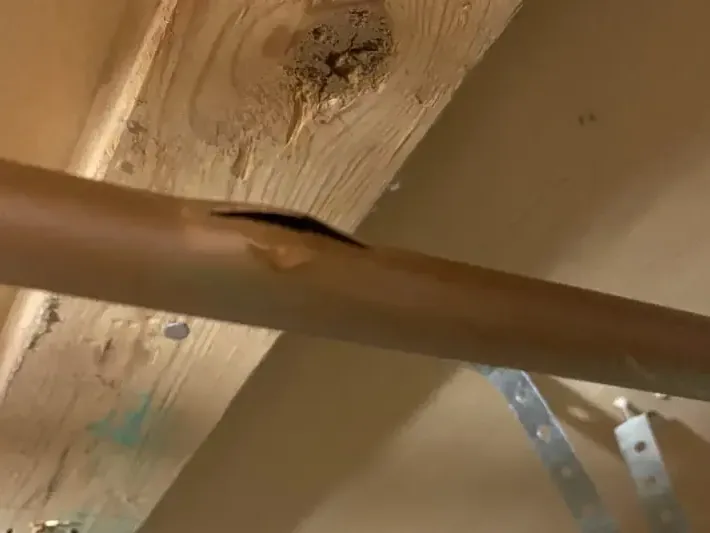
Professional attention for burst pipe water damage
Rapid local response
The response team treats active water movement as urgent. Dispatch records the source, affected rooms and safe entry conditions so the extraction plan starts with the actual problem.
IICRC S500 drying standard
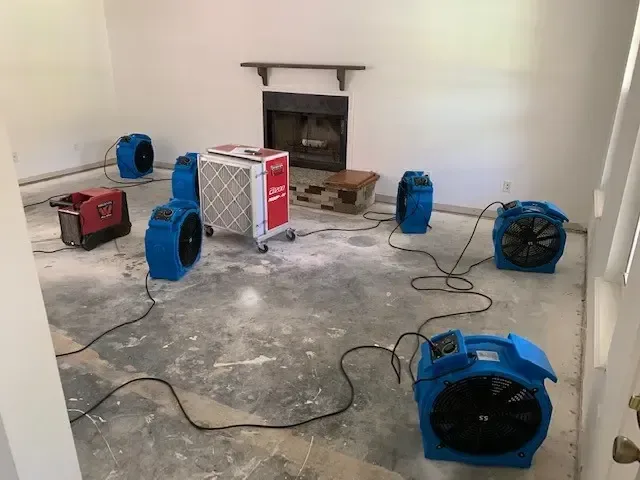
The drying team measures wet materials against a dry reference, manages evaporation with extraction and dehumidification, and adjusts equipment as readings change through the drying cycle.
Claim-ready documentation
The restoration technician records visible damage before removal, maps concealed moisture and maintains dated progress notes. That record separates emergency mitigation work from subsequent plumbing or building repairs.
Local water experts
The inspection follows the route water took through the property. Floor transitions, wall cavities and concealed layers receive attention even when the visible puddle occupies only a small area.
First steps for burst pipe water damage
Isolate the supply
The owner closes a reachable water valve from dry footing. A plumbing professional handles damaged valves or a shutoff behind an unsafe wet area.
Protect the room below
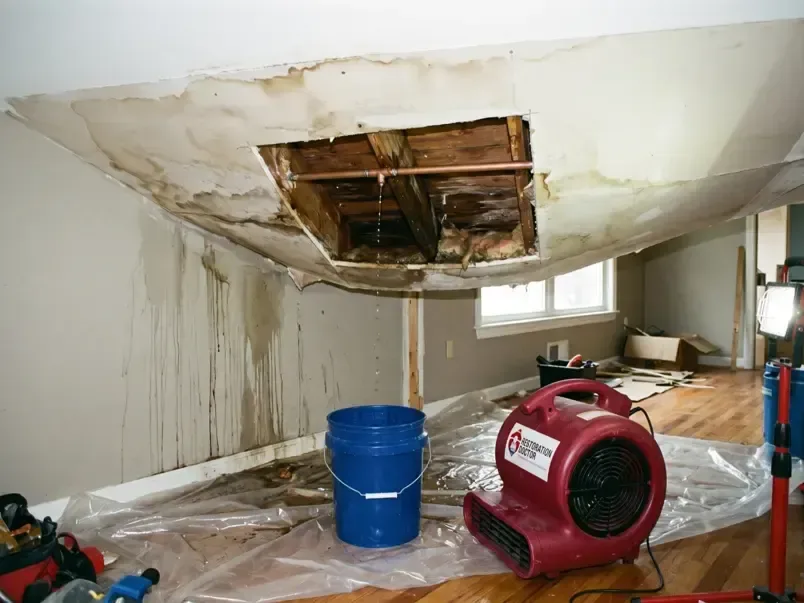
Occupants avoid the space under a wet or sagging ceiling. The crew checks overhead stability before placing equipment or moving household belongings.
Record the failure
The owner saves photographs and the plumber's diagnosis. The restoration technician records the water path before opening walls changes the visible evidence.
Leave wet layers accessible
Rugs and stored items stay off damp flooring. The crew needs access to wall bottoms and connected rooms to map the full migration path.
What does burst pipe water damage cost in Lithia Springs, GA?
Burst pipe water damage cleanup in Lithia Springs typically ranges from $800 to $6,000 or more. The run time before shutoff, affected floors and concealed insulation drive the scope; plumbing repair and rebuilding are separate items.
One room, early shutoff
$800 to $1,800
- Accessible extraction
- Limited wet finishes
- Initial equipment setup
Walls and adjoining rooms
$1,800 to $3,800
- Cavity access
- Insulation removal
- Material moisture checks
Overhead or multiroom loss
$3,800 to $6,000+
- Ceiling assessment
- Broader extraction
- Extended monitoring
Water category, wet area, material class and the delay before drying shape the scope. The Lithia Springs water damage cost calculator provides an estimate only.
Documentation for your insurance claim
The claim file contains a moisture map, daily psychrometric logs, timestamped pre-demolition photos and a line-item scope. The restoration team records the water category and affected material class. Sudden accidental leaks, outside flooding and sewer backups can receive different treatment under a policy. The policyholder checks coverage and deductibles with the insurer before assuming any payment.
How burst pipe water damage is handled
The restoration plan follows the source, the wet materials and the measurements taken through each stage.
Confirm isolation
The plumber identifies and controls the failed supply while the restoration technician records the wet footprint and identifies rooms that need restricted access.
Extract the release
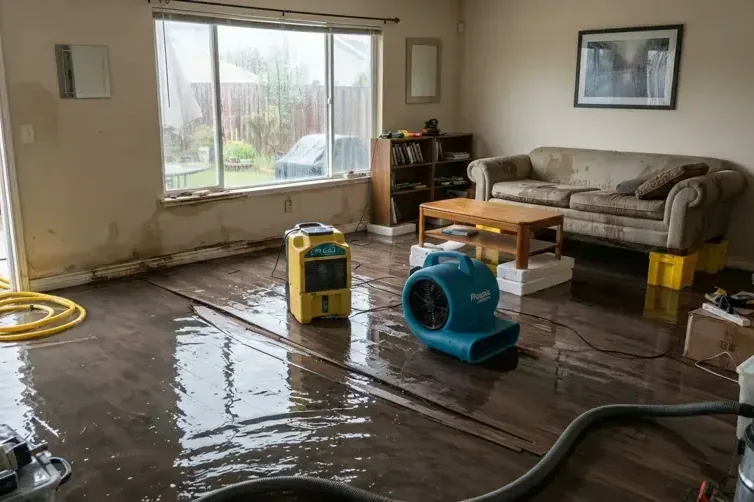
The crew removes pooled water from connected rooms, protects dry pathways and checks beneath floor coverings where water has migrated beyond the visible source.
Dry concealed assemblies
The drying team opens necessary cavities, removes unsuitable wet insulation and directs airflow toward accessible framing while controlling humidity with appropriate dehumidification.
Check the endpoints
The technician compares readings at the repaired area and distant wet edges, then records the drying results and the remaining repair work for the owner.
More about burst pipe water damage in Lithia Springs
A supply break keeps adding water until someone isolates it. The owner should report whether water is still moving, where the shutoff sits and whether the leak is above another occupied room. The restoration team prepares extraction around those details. A plumber confirms that the repair holds before drying measurements become a reliable picture of remaining moisture.
Trace pressure-driven water beyond the break
A failed connection inside a wall can spray across framing before water appears at a baseboard. In Heritage Square, the crew checks adjoining rooms and floor transitions instead of assuming that the stained wall contains the whole loss. Homes in Bearden Place and along Blair Bridge Road receive the same inspection of their actual assemblies, including any areas changed during remodeling.
- Inspect the room below an overhead supply failure.
- Check both sides of a wet wall where access permits.
- Measure cabinet backs and floor edges near the original leak.
Supply water starts with a different contamination profile from sewage, but time and contact with dirty materials can change the cleanup plan. The technician documents the condition found on arrival. The owner avoids restarting the supply merely to demonstrate the leak; photographs and the plumber's findings can preserve that information safely.
Open cavities where trapped moisture persists
Insulation can hold water against framing after the outside of drywall feels dry. The restoration crew uses meter readings and limited inspection access to decide what needs opening. Swollen trim and separated floor coverings may need removal, while sound materials can sometimes remain with suitable drying access. The proposed scope explains the reason for each opening.
- Remove wet insulation that prevents cavity airflow.
- Protect clean room surfaces during controlled drywall removal.
- Photograph concealed wet materials before disposal.
A cold-weather pipe failure needs a plumber's assessment of the damaged section and nearby exposed piping. The restoration work then focuses on water already released. Drying machines do not repair a weakened fitting or prevent a second leak. Water extraction removes the initial liquid load before the cavity dry-out begins.
Water still affecting the floor?
A repaired supply can leave soaked wall cavities behind it. The restoration crew checks the migration path and records the access needed for effective drying.
(888) 532-4616Discuss the supply-pipe damageCheck the repaired area and the migration path
The drying technician revisits both the source location and the farthest wet points. That matters when water follows a joist bay or moves beneath a continuous floor finish. Temperature and humidity logs describe the drying environment, while material readings show whether framing and floor layers respond. A dry surface alone is not the release criterion.
- Keep the repaired pipe accessible for any required plumbing inspection.
- Track moisture at repeatable locations rather than choosing a new spot each day.
- Separate plumbing invoices from mitigation and later reconstruction.
The drying-time estimator illustrates how materials and delay affect a planning window. The actual endpoint comes from measurements, source control and the condition of the opened structure.
Never reach through wet electrical equipment
The occupant uses a water shutoff only from a safe position. Water near a panel, outlet or appliance requires professional electrical assessment. The restoration crew keeps equipment outside unsafe areas until hazards are controlled, and the household stays away from sagging ceilings beneath the break.
Burst pipe water damage in Lithia Springs
Service coverage includes ZIP 30122, Beechwood Hills, Chestnut Log, Heritage Square, Park Forest and homes along Mount Vernon Road. Dispatch uses the property location and access conditions to plan the response.
Water damage response is available 24/7.
Related water damage services in Lithia Springs
Burst Pipe Water Damage questions
Talk through the wet areas
A repaired supply can leave soaked wall cavities behind it. The restoration crew checks the migration path and records the access needed for effective drying.
(888) 532-4616Discuss the supply-pipe damageIs shutting off one fixture enough?
A local valve may control a fixture leak, but a break upstream can continue receiving water. The owner uses only a safe, accessible shutoff. A plumber confirms which supply feeds the damaged section and whether isolation has stopped the release.
Can frozen pipes leak after thawing?
A freeze-damaged pipe may release water when flow returns. The plumber checks the failed section and any related exposed piping. The restoration crew then measures the affected rooms rather than assuming the thaw left only a small surface puddle.
Why check the next room if it looks dry?
Water can travel beneath flooring, through wall bottoms and along framing. A visible stain may lag behind concealed moisture. Meter checks in adjacent assemblies establish a reliable boundary before the drying plan stops at a doorway.
Must every wet wall be removed?
The team evaluates material condition, contamination, insulation and drying access. Sound materials may dry with controlled access, while damaged or obstructive layers require removal. The written scope explains the decision for each affected wall assembly.
Can a repaired pipe mean the work is finished?
Pipe repair stops new water. Existing moisture can remain in framing, insulation and flooring. The restoration technician tracks those materials until the drying goal is met, then identifies any reconstruction needed before the room returns to ordinary use.
What helps an insurance review?
Original photographs, the plumber's cause description, the mitigation scope and dated moisture records help explain the loss. The insurer decides coverage under the policy. Keeping plumbing and restoration charges distinct makes the sequence easier to review.
Stop the leak, then dry the hidden layers
The cleanup team follows the water through adjoining walls and floors so reconstruction starts with a measured dry structure.
(888) 532-4616Assess the pipe damage footprint