Ceiling Leak Water Damage in Villa Rica
A changing ceiling stain needs a source check before patching. Water may be collecting above the visible surface, so safe access and the condition of the overhead assembly come first.
(888) 532-4616Discuss the changing ceiling patch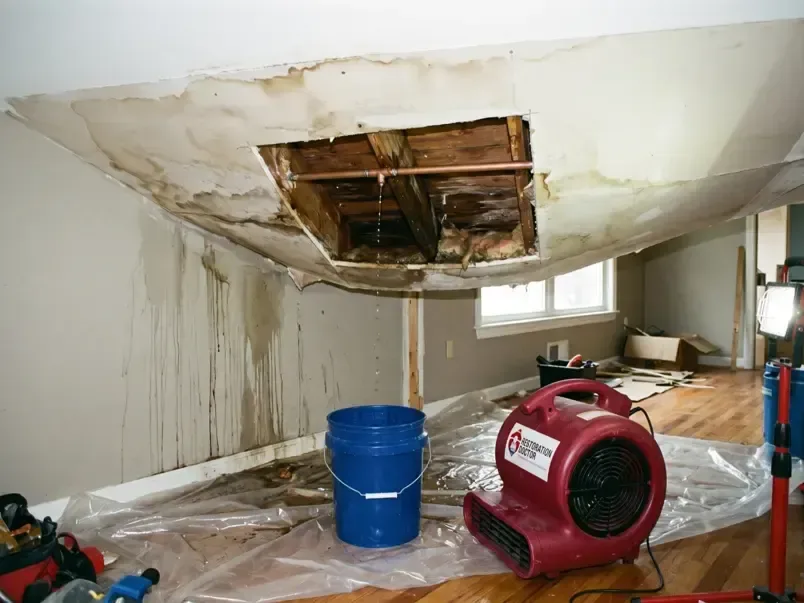
Professional attention for ceiling leak water damage
Rapid local response
The response team treats active water movement as urgent. Dispatch records the source, affected rooms and safe entry conditions so the extraction plan starts with the actual problem.
IICRC S500 drying standard
The drying team measures wet materials against a dry reference, manages evaporation with extraction and dehumidification, and adjusts equipment as readings change through the drying cycle.
Claim-ready documentation
The restoration technician records visible damage before removal, maps concealed moisture and maintains dated progress notes. That record separates emergency mitigation work from subsequent plumbing or building repairs.
Local water experts
The inspection follows the route water took through the property. Floor transitions, wall cavities and concealed layers receive attention even when the visible puddle occupies only a small area.
First steps for ceiling leak water damage
Establish a clear area
Keep people and belongings away from the space beneath the damaged patch. Do not test the ceiling by pressing upward or poking through its surface.
Identify visible changes
Note whether the stain spreads, the panel sags or dripping continues. Photographs from the same safe position can show the change without disturbing weakened material.
Describe what sits above
Mention any known room, roof space or fixture above the affected area. Those details help source investigation while the overhead assembly is assessed directly.
Plan protection and access
Discuss safe room access and belongings that cannot be moved. The work boundary should account for ceiling debris, inspection openings and the route to wet cavities.
What does ceiling leak water damage cost in Villa Rica, GA?
Ceiling leak damage cleanup in Villa Rica depends on panel stability, wet insulation, concealed framing and spread into adjoining walls. Source correction, controlled opening and drying should be distinguished from replacement ceiling finishes in the proposed estimate.
Localized ceiling area
$900 to $1,800
- Contained overhead footprint
- Accessible cavity checks
- Limited material removal
Ceiling cavity and insulation
$1,800 to $3,500
- Wet insulation handling
- Expanded overhead access
- Retained framing drying
Ceiling and wall migration
$3,500 to $5,500+
- Connected wall cavities
- Broader moisture tracking
- Additional finish exposure
Water category, wet area, material class and the delay before drying shape the scope. The water damage cost calculator provides an estimate only.
Documentation for your insurance claim
The claim file contains a moisture map, daily psychrometric logs, timestamped pre-demolition photos and a line-item scope. The restoration team records the water category and affected material class. Sudden accidental leaks, outside flooding and sewer backups can receive different treatment under a policy. The policyholder checks coverage and deductibles with the insurer before assuming any payment.
How ceiling leak water damage is handled
The restoration plan follows the source, the wet materials and the measurements taken through each stage.
Assess overhead stability
The inspection considers the panel condition, fixtures and available approach. A clear work boundary is established before opening any surface that may hold water or loose material.
Investigate the source path
The visible patch is connected to accessible conditions above it. Source repair needs and wet material boundaries are recorded together so inspection openings serve a clear purpose.
Expose and monitor
Damaged panels and unsuitable insulation receive removal decisions. Retained framing and adjoining materials are dried with access suited to their position and measurements documenting the progress.
Authorize finish preparation
The handoff identifies the source status, material condition and replacement work remaining. Closing the cavity follows readiness of the structure rather than the appearance of the ceiling stain.
More about ceiling leak water damage in Villa Rica
A Townsend Village ceiling that darkens or begins to sag needs an inspection of both the panel and the space above it. The visible room does not settle whether the source is plumbing, roof entry or another release. Establishing that source and the overhead condition comes before cutting a patch or planning paint work.
Read the ceiling condition from a safe position
Dripping, soft areas and changing shape can indicate water held above the finish. The space beneath damaged material should remain clear until access is assessed. A stable-looking edge does not describe the entire panel. Inspection should account for attachment, adjacent electrical fittings and the route water took through the concealed assembly.
- Photograph the stain and surrounding ceiling from outside the affected footprint.
- Describe any sagging, falling material or moisture around lights and fittings.
- Keep occupants away from the area below a visibly weakened overhead surface.
At a Brookside property, useful observations include which room is above the stain and whether dripping changes when a fixture operates or rain begins. Those observations support source investigation without replacing it. A ceiling can remain wet after the visible drip stops, especially when insulation or enclosed framing holds moisture above the room.
Open only with a purpose for the cavity
Selective opening may be needed to remove weakened material, reach soaked insulation or inspect the source path. The proposed access should explain which question it answers. Random holes can miss the affected assembly and create additional finish repairs. A planned opening also helps contain debris and protect the usable portions of the room below.
- Identify the area needed to remove unsafe or unsuitable ceiling material.
- Assess insulation separately from the panel visible inside the occupied room.
- Follow water into wall tops where the ceiling meets adjoining construction.
Wicks Tavern is a Dutch-style timber-framed building. That local construction reference highlights the importance of knowing what sits behind a finish. At the damaged property, retained timber or other framing needs direct assessment where accessible. The restoration decision should reflect the inspected assembly rather than treating every ceiling as a thin layer of wallboard.
Water still affecting the floor?
A ceiling patch can conceal water above the room. Describe the stain, any change in shape and nearby electrical fittings so safe access is part of the first assessment.
(888) 532-4616Review the overhead access concernDecide when the replacement surface can return
Closing a ceiling hides the cavity again. Source correction and material moisture checks should therefore be completed in a coordinated sequence. Drying equipment needs a path to wet retained surfaces, while measurements establish whether they are improving. Insulation and replacement panels should not conceal a cavity merely because dripping has stopped in the room below.
- Record which source repair was completed and which wet materials remain.
- Check retained framing before replacement insulation restricts access to its surfaces.
- List ceiling, trim and decorating tasks separately from the mitigation work.
When the investigation confirms an overhead supply release, the burst pipe page explains how source repair and interior recovery connect. A roof-related finding changes that coordination. The ceiling restoration plan should follow the actual cause while keeping its focus on safe access, damaged materials and drying the assembly before closure.
Do not puncture a bulging ceiling from below
Water and weakened material can release suddenly when a ceiling is disturbed. Keep the area underneath empty and avoid ladders beneath the damaged patch. Electrical concerns add another reason to restrict access. Describe the visible change from a dry, stable location while safe assessment and source attention are arranged.
Ceiling leak water damage in Villa Rica
Townsend Village, Brookside and other Villa Rica properties can describe a ceiling leak by room and visible change. Mention sagging, active dripping and nearby electrical fixtures when arranging the assessment.
The same service nearby: ceiling leak water damage in Lithia Springs, Hiram, Union City.
Related water damage services in Villa Rica
Ceiling Leak Water Damage questions
Talk through the wet areas
A ceiling patch can conceal water above the room. Describe the stain, any change in shape and nearby electrical fittings so safe access is part of the first assessment.
(888) 532-4616Review the overhead access concernDoes a ceiling stain always mean a roof leak?
A roof opening is one possible source, but plumbing or another release can also wet a ceiling. Inspection above the patch identifies the cause. The restoration scope should follow that finding instead of assigning a source from the stain alone.
Is it safe to sleep beneath a damp ceiling?
A sagging, softened or actively leaking ceiling calls for a clear area underneath while its condition is assessed. Electrical fittings nearby add concern. Occupants should use another space rather than remain beneath an overhead surface whose stability has not been established.
Can the ceiling dry without being opened?
Some assemblies may be accessible from above, while others need a controlled opening. Material condition and the location of wet insulation affect the decision. The inspection should explain how retained surfaces will be reached and how their moisture will be checked.
Why does the wall need inspection too?
Water can follow the ceiling toward a wall junction and enter the adjoining cavity. The visible overhead patch may therefore be only part of the damage. Checking wall tops and lower edges helps establish whether moisture traveled beyond the ceiling itself.
Should wet insulation stay while fans run?
Insulation requires its own condition assessment. Damaged or unsuitable material may need removal to expose wet framing and support drying. Direct inspection and moisture checks determine whether concealed insulation can remain and whether the cavity is ready for closure.
What happens before repainting the repaired area?
The source needs correction, damaged materials need appropriate removal and retained construction needs moisture evaluation. Replacement panels and finishing then follow a stable assembly. Keeping these steps visible avoids treating cosmetic stain coverage as completion of the underlying water damage work.
Restore the assembly before refinishing the ceiling
Source inspection, material removal and measured drying establish what needs to happen before a replacement surface closes the cavity again.
(888) 532-4616Discuss the wet ceiling assembly