Ceiling Leak Water Damage in Union City
A ceiling drip puts the room below in the work area before the source is known. Assessment checks overhead stability, traces the supply of water and evaluates the cavity behind the finish.
(888) 532-4616Discuss the overhead wet area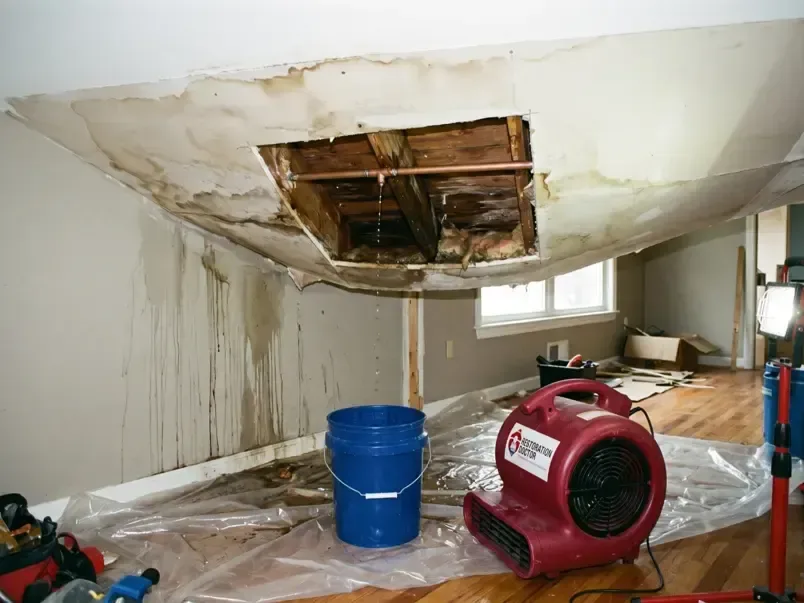
Professional attention for ceiling leak water damage
Rapid local response
The response team treats active water movement as urgent. Dispatch records the source, affected rooms and safe entry conditions so the extraction plan starts with the actual problem.
IICRC S500 drying standard
The drying team measures wet materials against a dry reference, manages evaporation with extraction and dehumidification, and adjusts equipment as readings change through the drying cycle.
Claim-ready documentation
The restoration technician records visible damage before removal, maps concealed moisture and maintains dated progress notes. That record separates emergency mitigation work from subsequent plumbing or building repairs.
Local water experts
The inspection follows the route water took through the property. Floor transitions, wall cavities and concealed layers receive attention even when the visible puddle occupies only a small area.
First steps for ceiling leak water damage
Close the area beneath the damage
Move household activity away from the ceiling footprint and any connected wet floor. A room with bulging or loose material needs a clear boundary until it is assessed.
Observe the source pattern safely
Note whether dripping follows fixture use or continues without it. These observations help the source investigation, but they should be made without entering hazardous overhead spaces.
Preserve the room relationship
Identify the affected room and the space above it when known. Photographs and a simple description help connect the ceiling damage with the route water may have taken.
Plan contents movement outside the footprint
Light belongings can be relocated only where access is safe. Heavy furniture or items beneath unstable ceiling material should remain until a protected movement plan is established.
What does ceiling leak water damage cost in Union City, GA?
Union City ceiling leak restoration costs depend on cavity access, insulation condition and migration into walls. The planning ranges below describe interior treatment; source repairs and decorative replacement work need their own clearly stated allowances in the written assessment.
Localized ceiling area
$900 to $1,800
- Small overhead footprint
- Focused moisture inspection
- Limited access work
Ceiling cavity and insulation
$1,800 to $3,500
- Hidden layer assessment
- Selective overhead removal
- Retained material drying
Ceiling and wall migration
$3,500 to $5,500+
- Connected surface checks
- Expanded cavity treatment
- Broader finish handoff
Water category, wet area, material class and the delay before drying shape the scope. The water damage cost calculator provides an estimate only.
Documentation for your insurance claim
The claim file contains a moisture map, daily psychrometric logs, timestamped pre-demolition photos and a line-item scope. The restoration team records the water category and affected material class. Sudden accidental leaks, outside flooding and sewer backups can receive different treatment under a policy. The policyholder checks coverage and deductibles with the insurer before assuming any payment.
How ceiling leak water damage is handled
The restoration plan follows the source, the wet materials and the measurements taken through each stage.
Assess the overhead assembly
Inspection starts with stability and electrical concerns before tracing the wet boundary. The source status and relation between the affected room and spaces above it are recorded.
Provide purposeful cavity access
Approved openings expose the layers requiring attention. Damaged ceiling material and insulation are handled according to their condition, with unaffected contents protected along the removal route.
Track drying at connected surfaces
Equipment and access support retained ceiling and wall materials. Repeated readings help identify whether a damp perimeter or concealed pocket still needs attention after the visible face improves.
Document readiness for finish work
The handoff states the source repair status, completed drying work and remaining reconstruction areas. It also identifies any unresolved access issue before patching or painting conceals the assembly.
More about ceiling leak water damage in Union City
The shape of a ceiling stain does not describe the whole wet cavity. A drip may travel along a framing member before reaching the lowest opening, while insulation above the finish holds additional water. Union City ceiling work begins by making the area below safe and establishing what continues to feed the affected assembly.
Describe what is above the damaged room
Useful observations include the room overhead, nearby fixtures and whether dripping follows appliance use or rain. Those observations help the appropriate trade investigate the source. They also help the restoration inspection distinguish the original entry from water that has migrated sideways before appearing on the ceiling face.
Townhomes at The Enclave at Whitewater Creek offer a setting for room specific records. In an affected residence, label the stained room and document the actual spaces above or beside it. A clear room relationship is more useful for ceiling access than treating every visible mark as an independent leak.
- Record changes in the stain without standing below loose drywall.
- Describe any water appearing at a wall corner or light fitting.
- Keep the source investigation notes separate from finish repair proposals.
Plan overhead access around material condition
Swollen wallboard may need removal for safety and access, while nearby intact surfaces require their own moisture checks. The proposed opening should reveal the wet area that needs treatment. It should also account for insulation, concealed wiring and the route used to lower damaged material out of the room.
A property near Mayor's Park can identify a dry entrance and somewhere for movable contents outside the work zone. Protecting that route helps keep debris and equipment away from occupied spaces. Photographing the ceiling before work begins preserves the distinction between the original damage and the opening made for access.
Water still affecting the floor?
Describe the stain, any sagging and the room above the damaged area. A clear account helps prioritize safe access and the inspection of concealed wet layers before finish work begins.
(888) 532-4616Discuss the ceiling cavityFollow moisture where the ceiling meets the wall
A ceiling inspection should include connected wall edges when readings or visible signs suggest migration. Water can collect at a joint and leave the room's center looking better than its perimeter. Structural drying needs to serve the retained layers rather than only the air in the room beneath them.
- Map the wet boundary around the opening before equipment is placed.
- Check retained material response during subsequent visits to the property.
- List patching and painting after the drying assessment in the scope.
Ronald Bridges Park & Nature Trail can help locate a nearby household during scheduling. Inside, the handoff should focus on the ceiling cavity: the source status, material removal, drying observations and any surfaces still awaiting reconstruction. Those details make the transition to finish repairs clearer than a photograph of a fading stain alone.
Do not drain a bulge from below
A swollen ceiling can release water and material unexpectedly. Keep occupants and furniture out from beneath it, avoid touching wet light fittings and do not make a hole to empty the cavity. Safe access and electrical conditions need assessment before anyone disturbs the overhead assembly.
Ceiling leak water damage in Union City
Union City homes can report the room beneath the leak and any room directly above it. A location near Flat Shoals Road helps with scheduling, while the interior layout directs the ceiling assessment.
The same service nearby: ceiling leak water damage in Lithia Springs, Villa Rica, Hiram.
Related water damage services in Union City
Ceiling Leak Water Damage questions
Talk through the wet areas
Describe the stain, any sagging and the room above the damaged area. A clear account helps prioritize safe access and the inspection of concealed wet layers before finish work begins.
(888) 532-4616Discuss the ceiling cavityDoes the stain show exactly where the leak starts?
Water can travel above the finish before finding an opening. The inspection uses the room layout, source findings and moisture readings together to trace the route, rather than placing the source directly above the visible stain automatically.
Can a bucket make the room safe?
A bucket may catch a drip but does not address unstable drywall, wet electrical fittings or water retained in the cavity. Keep the area beneath damage clear until the overhead condition and safe access requirements have been assessed.
Why inspect the wall beside the ceiling?
Moisture can move through the ceiling edge and collect in adjacent wall materials. Checking that connection helps define the drying area and avoids finishing the central ceiling while a damp perimeter remains behind trim or wallboard.
Is insulation always removed after a ceiling leak?
Its condition, exposure and accessibility determine the decision. The scope should identify the actual insulation found and explain whether it can remain or needs removal to address retained moisture and provide access to the surrounding wet assembly.
Can furniture remain under the work area?
Furniture beneath unstable or opened ceiling material can obstruct safe access and be damaged during work. The inspection should establish a protected movement or covering plan, with heavy pieces handled only after the overhead hazard is addressed.
What comes before patching the opening?
Source control and treatment of the wet cavity need to precede finish repairs. Documentation should describe the condition of retained materials and any remaining work, so patching and painting follow the restoration sequence instead of hiding an unresolved wet layer.
Give the overhead damage a clear repair sequence
The assessment can connect source correction, selective access and drying with the patching and painting needed after the assembly is ready.
(888) 532-4616Arrange an overhead moisture assessment