Commercial Water Damage in Union City
A wet business interior needs a work boundary that staff can understand. Restoration records separate affected rooms, protected contents and usable access while management coordinates source repair and the next operational decisions.
(888) 532-4616Discuss the affected business rooms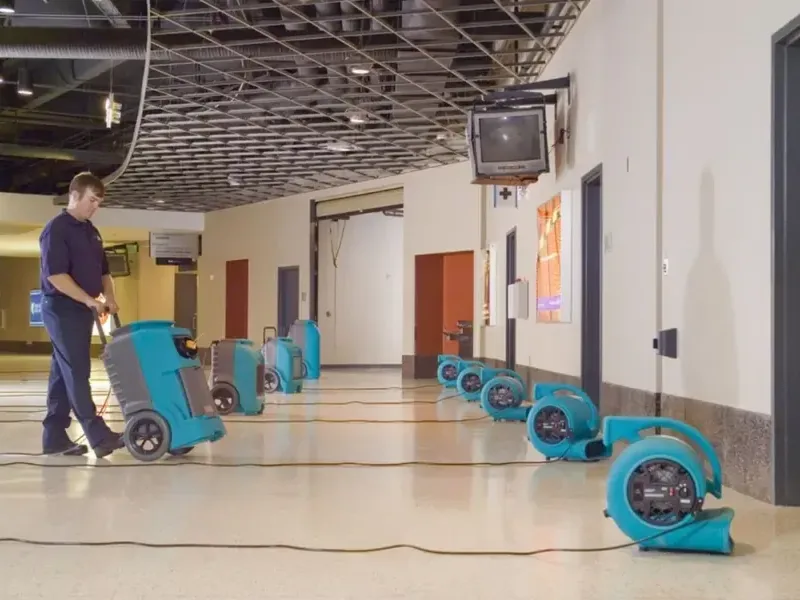
Professional attention for commercial water damage
Rapid local response
The response team treats active water movement as urgent. Dispatch records the source, affected rooms and safe entry conditions so the extraction plan starts with the actual problem.
IICRC S500 drying standard
The drying team measures wet materials against a dry reference, manages evaporation with extraction and dehumidification, and adjusts equipment as readings change through the drying cycle.
Claim-ready documentation
The restoration technician records visible damage before removal, maps concealed moisture and maintains dated progress notes. That record separates emergency mitigation work from subsequent plumbing or building repairs.
Local water experts
The inspection follows the route water took through the property. Floor transitions, wall cavities and concealed layers receive attention even when the visible puddle occupies only a small area.
First steps for commercial water damage
Identify the responsible property contact
Management should name the person coordinating entry, work approval and source repair. Clear authority keeps contents movement and material removal aligned with the agreed scope.
Restrict the affected circulation route
Staff and visitors need a dry path that avoids wet electrical equipment and damaged finishes. Mark unavailable areas while the inspection establishes how restoration equipment can reach the loss.
Record contents by room
Photograph affected stock, furniture and equipment in their original locations where safe. A room inventory preserves context before approved movement creates space for extraction or material access.
Share operational access needs
Tell the inspector about occupied rooms, restricted storage and necessary entrances. These conditions help organize the work zones while management evaluates how activities can continue around the affected space.
What does commercial water damage cost in Union City, GA?
Union City commercial restoration ranges depend on the wet area, contents handling and access complexity. A written assessment should distinguish extraction and drying from source repair, specialized equipment service and reconstruction, with changes approved by the designated property representative.
Contained business area
$2,000 to $4,500
- Defined room footprint
- Accessible water recovery
- Limited contents relocation
Multiple work zones
$4,500 to $9,000
- Connected material assessment
- Coordinated equipment access
- Broader drying layout
Complex interior loss
$9,000 to $15,000+
- Extensive contents records
- Restricted access planning
- Multiple repair interfaces
Water category, wet area, material class and the delay before drying shape the scope. The water damage cost calculator provides an estimate only.
Documentation for your insurance claim
The claim file contains a moisture map, daily psychrometric logs, timestamped pre-demolition photos and a line-item scope. The restoration team records the water category and affected material class. Sudden accidental leaks, outside flooding and sewer backups can receive different treatment under a policy. The policyholder checks coverage and deductibles with the insurer before assuming any payment.
How commercial water damage is handled
The restoration plan follows the source, the wet materials and the measurements taken through each stage.
Agree on the building boundaries
The inspection maps wet rooms, safe approaches and management restrictions. The contact receives a scope connecting source status with affected materials and contents requiring handling.
Recover water through planned routes
Extraction and approved removal use access routes coordinated with the property representative. Contents locations and material decisions are documented as work exposes previously concealed wet areas.
Monitor separate material zones
Drying records distinguish rooms and assemblies so progress in one area does not obscure a remaining problem elsewhere. Equipment changes are explained alongside the observations driving them.
Hand the space back with records
The handoff identifies completed treatment, reconstruction and access restrictions. Management can coordinate the next trades using a documented account of the affected areas.
More about commercial water damage in Union City
A water loss can interrupt a business before the full damage is visible. Staff need to know which rooms remain accessible, who can approve work and where affected contents should stay. Commercial restoration in Union City begins with those practical boundaries, then maps the wet surfaces and source conditions that determine removal and drying.
Assign decisions before moving inventory
A designated property representative can coordinate source repairs, access and material approvals. That contact should receive a room based scope showing what is wet and which areas remain unassessed. Moving stock or furniture without a location record can make later inspection and loss documentation more difficult.
- Identify the person authorized to approve access and material removal.
- Record affected contents in place before approved relocation begins.
- Mark the dry route used by staff and visiting repair trades.
For premises near Flat Shoals Road, entry instructions should name the usable door and any restricted work areas. The restoration route can then account for deliveries, equipment and occupied spaces. The plan should explain where water recovery ends and where retained materials still need treatment before furnishings return.
Build the work zones around actual use
Union City is in the Fulton County School District. That community building context highlights the importance of clear access records wherever multiple people use an interior. At an affected commercial property, the actual room functions, occupancy and management instructions determine how the cleanup zone is arranged.
A site using Mayor's Park as a nearby reference still needs an interior map that distinguishes affected offices, storage or circulation space as applicable. Separate those observations rather than applying one description to the whole building. A wet doorway can affect access even when the room beyond it has stayed dry.
Water still affecting the floor?
Provide the affected rooms, the management contact and any access restrictions before the visit. Those details help organize a commercial assessment around the building's actual work areas and contents.
(888) 532-4616Discuss business access and cleanupConnect material progress with the next work phase
After accessible water removal, retained walls and flooring may need continued drying. Updates should describe which materials are improving and why another area remains restricted. Management can use that information when coordinating repair trades and deciding how activities will operate around the restoration work.
- Keep changes to the approved removal scope in the written record.
- Identify equipment locations that affect staff movement through the building.
- Separate reconstruction tasks from the completion of water recovery work.
Ronald Bridges Park & Nature Trail can provide another location reference for scheduling a nearby property. The final handoff should be specific to that building: treated rooms, retained materials, affected contents and outstanding repairs. It should also explain access limitations so management's decisions follow the condition of the space instead of the appearance of a dry hallway.
Do not route staff through the water
A temporary shortcut through an affected area can expose people to electrical hazards, slippery surfaces and unstable finishes. Keep staff and visitors on an assessed dry route. Wet equipment, ceiling damage or contaminated water require clear restrictions while the property representative coordinates appropriate professional attention.
Commercial water damage in Union City
Union City businesses can provide a management contact, entry instructions and the affected work areas when scheduling. A Flat Shoals Road reference helps locate the property while the interior plan establishes the restoration boundary.
The same service nearby: commercial water damage in Lithia Springs, Villa Rica, Hiram.
Related water damage services in Union City
Commercial Water Damage questions
Talk through the wet areas
Provide the affected rooms, the management contact and any access restrictions before the visit. Those details help organize a commercial assessment around the building's actual work areas and contents.
(888) 532-4616Discuss business access and cleanupWho should authorize commercial cleanup work?
The owner or management should identify a representative with authority to approve access and scope changes. A clear decision contact helps coordinate source repair, material removal and contents handling without conflicting instructions from different occupants or staff members.
Can operations continue in another room?
That depends on safe access, the water source and the work required. Management should make operational decisions using the assessed boundaries and restrictions, with a dry route that avoids equipment, affected finishes and any area still needing investigation.
Should staff move wet inventory immediately?
Document affected items in place when safe before relocation changes the record. The handling plan should consider item condition, weight and the route through the building, especially where movement could carry water or contamination into a dry work area.
Why split the building into drying zones?
Separate room and material records make progress easier to assess. A concealed office floor layer needs its own moisture checks, even after the hallway dries. The plan tracks each affected assembly so management can follow the remaining work.
Does the quote cover damaged business equipment?
The written scope should identify what restoration handles and what requires specialist service. Extraction, building material drying, equipment repair and finish reconstruction are different tasks, and each needs a clear allowance or exclusion before management approves the work.
What should management receive at handoff?
Useful records include the treated room list, material observations, contents movement notes and remaining repair tasks. Any access restrictions should also be explained so the property representative can coordinate reconstruction and use of the space with the next trades.
Give management a clear picture of each wet zone
A room based scope connects removal, drying and repair needs with the decisions required before affected spaces return to ordinary use.
(888) 532-4616Arrange the business interior assessment