Ceiling Leak Water Damage in Acworth
A soft ceiling panel needs more attention than a cosmetic stain. The recovery plan starts above the visible damage, identifies the water source and establishes whether the room can be approached safely.
(888) 532-4616Discuss a wet overhead cavity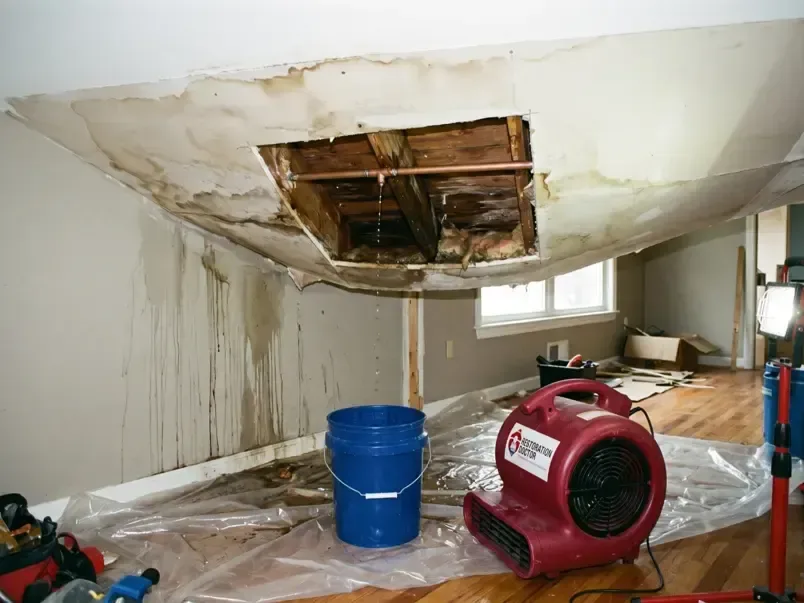
Professional attention for ceiling leak water damage
Rapid local response
The response team treats active water movement as urgent. Dispatch records the source, affected rooms and safe entry conditions so the extraction plan starts with the actual problem.
IICRC S500 drying standard
The drying team measures wet materials against a dry reference, manages evaporation with extraction and dehumidification, and adjusts equipment as readings change through the drying cycle.
Claim-ready documentation
The restoration technician records visible damage before removal, maps concealed moisture and maintains dated progress notes. That record separates emergency mitigation work from subsequent plumbing or building repairs.
Local water experts
The inspection follows the route water took through the property. Floor transitions, wall cavities and concealed layers receive attention even when the visible puddle occupies only a small area.
First steps for ceiling leak water damage
Keep people below clear
Move activity out from under sagging or softened ceiling sections. A container beneath a drip should not require anyone to remain in an unstable area.
Describe the overhead context
Identify the room or attic above the stain and any recent fixture use. Share those observations without opening the ceiling or disturbing wet electrical fittings.
Control a reachable source
If a known supply valve can be reached safely, isolate the affected fixture or pipe. Leave uncertain plumbing and electrical isolation to qualified personnel assessing the loss.
Preserve the ceiling pattern
Photograph discoloration and spreading joints from a safe doorway. Include adjoining walls so later inspection can follow the path after damaged material has been removed.
What does ceiling leak water damage cost in Acworth, GA?
Acworth ceiling recovery costs reflect panel condition, cavity access and moisture extending into insulation or walls. The estimate should identify overhead removal and drying separately from the source repair, replacement materials and final painting needed to restore the room.
Localized ceiling area
$900 to $1,800
- Defined overhead footprint
- Accessible source area
- Limited material removal
Ceiling cavity and insulation
$1,800 to $3,500
- Wet insulation exposure
- Protected opening work
- Additional cavity drying
Ceiling and wall migration
$3,500 to $5,500+
- Connected vertical damage
- Multiple wet layers
- Broader repair preparation
Water category, wet area, material class and the delay before drying shape the scope. The water damage cost calculator provides an estimate only.
Documentation for your insurance claim
The claim file contains a moisture map, daily psychrometric logs, timestamped pre-demolition photos and a line-item scope. The restoration team records the water category and affected material class. Sudden accidental leaks, outside flooding and sewer backups can receive different treatment under a policy. The policyholder checks coverage and deductibles with the insurer before assuming any payment.
How ceiling leak water damage is handled
The restoration plan follows the source, the wet materials and the measurements taken through each stage.
Assess overhead access
The inspection identifies unstable panels, wet fixtures and safe observation points. The room remains restricted where falling material or electrical exposure could endanger occupants during assessment.
Trace the source above
Timing and accessible systems help distinguish fixture, pipe and rain entry. Source correction is assigned before cosmetic work can conceal the route that caused the ceiling damage.
Open affected layers deliberately
Necessary removal exposes damp insulation and retained framing. Protection below the opening and documentation of each layer keep the work area and repair scope clearly defined.
Check readiness for closure
Material readings track the cavity through drying. The handoff describes completed source work, remaining damp areas and the insulation or finish replacement still required before normal room use.
More about ceiling leak water damage in Acworth
A ceiling can hold water above its visible face while the room below shows only a dark patch. Sagging, softened joints or a changing bulge make access the immediate concern. Acworth ceiling leak assessment should start from a safe position and establish the source before deciding how the overhead assembly can be opened and dried.
Use the room above to narrow the source
A bathroom fixture, supply pipe or roof opening may each produce an overhead mark, but they require different repairs. The inspection should connect the timing of the leak with accessible systems above it. Water appearing after fixture use gives different information from a mark that changes during rain, and both observations belong in the initial account.
- Note which activities or weather conditions occurred before the ceiling changed.
- Describe wet light fittings without touching switches or removing their covers.
- Keep photographs of separate marks so the original pattern remains available.
Main Street and Dixie Highway refer to the same central corridor in the city. A property near that corridor or Logan Farm still needs its own room-by-room source assessment. Location helps arrange access; the overhead layout and observed water route determine where the inspection should concentrate within the building.
Separate damaged panels from dryable structural materials
A distorted ceiling panel can require removal even when the framing above it remains suitable for drying. Wet insulation may prevent airflow and conceal the far edge of the damage. The work description should identify these layers separately, explaining the reason for removal and how occupants and dry contents will be protected beneath the work area.
- Establish a protected area below the proposed overhead opening.
- Inspect adjacent wall tops when water reaches the ceiling perimeter.
- Document material condition before removal changes the visible damage footprint.
Selective access should provide a clear view of the wet assembly rather than simply cutting around the stain. Burst pipe recovery may be relevant when the source is a failed supply above the room. If rain entry is found, roof correction and interior drying should remain coordinated but separately described tasks.
Water still affecting the floor?
An overhead mark deserves a plan that starts with safe room access. Describe sagging, wet fixtures and the space above the ceiling so source tracing and material decisions can be coordinated.
(888) 532-4616Discuss overhead damage safelyHold the finish work until the cavity is ready
A replacement panel covers the very surfaces that need evaluation during drying. Before closure, the recovery record should identify the source correction, affected framing and moisture readings. Any inaccessible pocket or unresolved plumbing task needs an explicit next step so the appearance of a new ceiling does not become the measure of completion.
- Track damp areas at both the center and edges of the exposed cavity.
- Keep equipment placement clear of safe passage through adjoining occupied rooms.
- Explain remaining insulation and finish replacement after the drying stage.
Do not puncture a water-filled ceiling
Opening a bulge can release water and unstable material without warning. Do not stand below it, climb onto furniture or reach toward wet lighting. Restrict the room and arrange safe assessment of electrical conditions and ceiling stability before removal begins.
Ceiling leak water damage in Acworth
Describe the affected floor, the room above and any locked access when scheduling assessment. The location of wet lighting or a sagging panel helps define which areas require immediate separation from occupants.
The same service nearby: ceiling leak water damage in Lithia Springs, Hiram, Villa Rica.
Related water damage services in Acworth
Ceiling Leak Water Damage questions
Talk through the wet areas
An overhead mark deserves a plan that starts with safe room access. Describe sagging, wet fixtures and the space above the ceiling so source tracing and material decisions can be coordinated.
(888) 532-4616Discuss overhead damage safelyIs a ceiling safe if it only has a stain?
Inspection of the materials above the stain establishes their condition. Softness, sagging, dripping and nearby electrical fixtures affect access decisions. Keep clear of changing panels and arrange inspection before pressing on the surface or attempting a cosmetic repair.
Can the source be a fixture in another room?
Water can travel within an overhead assembly before appearing below. The inspection should consider the layout and timing of fixture use, not only the point directly above the stain. Source tracing may need access to adjoining spaces.
Should wet insulation stay above new drywall?
Insulation condition and moisture need evaluation before the cavity closes. Saturated material can obstruct drying and hold water against other layers. The scope should explain whether it is removed, treated or replaced and how the retained structure is checked.
What if the light fixture is dripping?
Stay away from the fixture and avoid touching switches or covers in the affected area. Electrical safety needs qualified assessment. Keep the room separated while the water source, power conditions and overhead material stability are addressed.
Does ceiling removal include repainting the room?
Removal and drying may be a different scope from finish reconstruction. The estimate should state whether insulation, new panels, joint finishing and painting are included. Clear boundaries help avoid treating an open, dry cavity as a fully restored room.
What indicates that the cavity can be closed?
The source should be corrected and the remaining materials evaluated through appropriate moisture measurements. The record should identify any unresolved wet pocket or repair task. Closure should follow that assessment rather than the disappearance of dripping alone.
Restore the ceiling from the cavity outward
A clear moisture record and source repair handoff help the next contractor replace damaged layers without covering an unfinished water problem inside.
(888) 532-4616Arrange ceiling cavity assessment