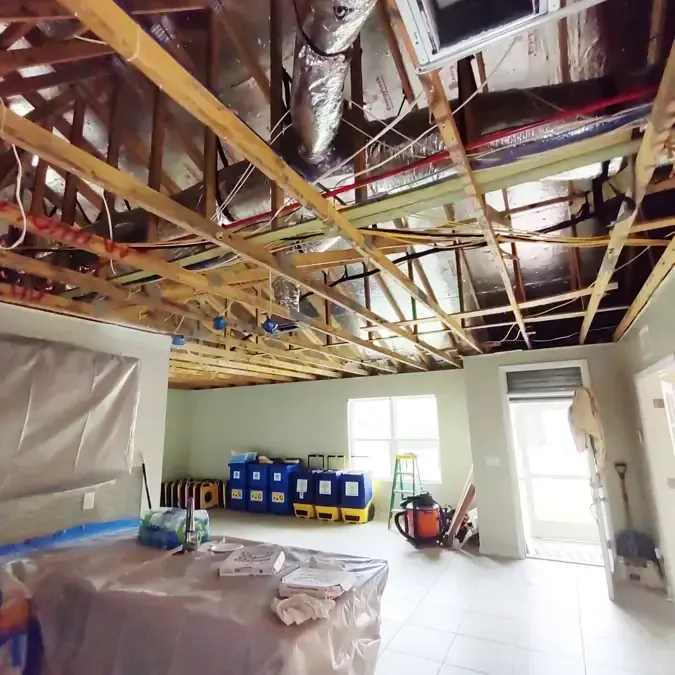
A ceiling stain that appears during rain deserves more than a coat of paint. Lithia Springs includes residential areas such as Beechwood Hills, Kensington Park and Skyview. In an affected home, the inspection starts with the stain's position, any change in shape and the rooms or roof space above it. Overhead stability and safe access determine how closely that area can be examined.
Key takeaways
- Sagging or bulging ceiling material should remain undisturbed until assessed.
- A discovery note should describe rain timing and changes in the visible stain.
- The source investigation may need access above the room as well as below it.
- Wet insulation and concealed framing require their own inspection and drying decisions.
- Source correction, cavity drying and decorative repair should be scheduled with a clear handoff.
A photograph should show the stain in its room
A close photograph of discoloration can lose the relationship between the ceiling, exterior wall and nearby opening. A wider image from safe footing helps locate the mark for the inspector.
The owner can then add a closer view only when that can be done without standing beneath unstable material.
The discovery note should record whether the mark was first noticed during rainfall, after it ended or during ordinary indoor water use. Changes in size, dripping and surface shape belong in the same note.
A short sequence gives the inspection a useful starting point without requiring the occupant to enter the space above.
In Beechwood Hills or another local residential area, the relevant layout is the actual home being inspected. A bedroom ceiling beneath a bathroom offers different access questions from a ceiling directly below roof framing.
The ceiling leak inspection follows those physical relationships to find the wet materials.
- Keep room features visible in an overall ceiling photograph.
- Record when dripping or visible swelling changed.
- Describe the known room or roof space above the mark.
Bulging material changes where occupants can stand
A sagging ceiling can conceal accumulated water and weakened material. Occupants should keep away from the area beneath it and avoid puncturing or pressing the surface.
The response team needs to assess stability and nearby electrical fixtures before deciding how the opening will be handled.
Furniture directly below a damaged section should remain in place until a safe retrieval method is established. A room can be restricted without asking residents to move belongings through the hazard.
Once access is assessed, the team can protect unaffected surfaces and plan controlled removal of unstable material.
The work boundary should include the space needed for tools, removed finishes and safe passage. Children and pets should remain outside that boundary between visits.
A clearly described access arrangement helps the household understand which doorway remains usable and which portion of the room is still under active treatment.
- Avoid standing below a visibly deformed ceiling.
- Leave wet lights, switches and connected equipment alone.
- Arrange contents retrieval through the assessed work route.
Water can travel before it becomes visible below
The first indoor mark may be offset from the opening that admitted water. Framing, insulation and the shape of a cavity can influence where moisture becomes visible.
Inspectors therefore connect the stain with observations above it instead of limiting the examination to the outline seen from the floor.
Access above the ceiling should be established by personnel able to assess the space safely. Their observations can identify damp insulation, wet framing and the route toward an exterior opening or plumbing component.
Photographs from that inspection give the owner a clearer explanation of why the repair scope extends past the visible stain.
Any water reaching the floor below adds another inspection area. The water extraction team can address accessible liquid while overhead work is coordinated.
Floor readings and contents photographs should remain connected to the ceiling event so the full indoor path is preserved in the record.
Rain protection and interior treatment need coordination
A roofing professional needs the discovery timing and the observations from the roof space to investigate a rain entry point. The owner should keep that appointment information beside the interior work scope.
This helps the trades coordinate access and explain which measures address incoming water and which address the materials already soaked.
Temporary protection should be documented with its location and the responsible trade's instructions. If more rain occurs during the work, any new dripping or change in the stain should be reported from a safe position.
That information allows the source repair and indoor moisture assessment to be reviewed together.
Lithia Springs is an unincorporated community in Douglas County. For the affected property, the repair contact should use the correct location information when arranging the applicable work.
The mitigation file can provide the photographs and opening locations needed to connect exterior correction with the interior repair.
- Share ceiling discovery notes with the source repair professional.
- Record temporary protection and planned follow up work.
- Report new water changes while the interior remains accessible.
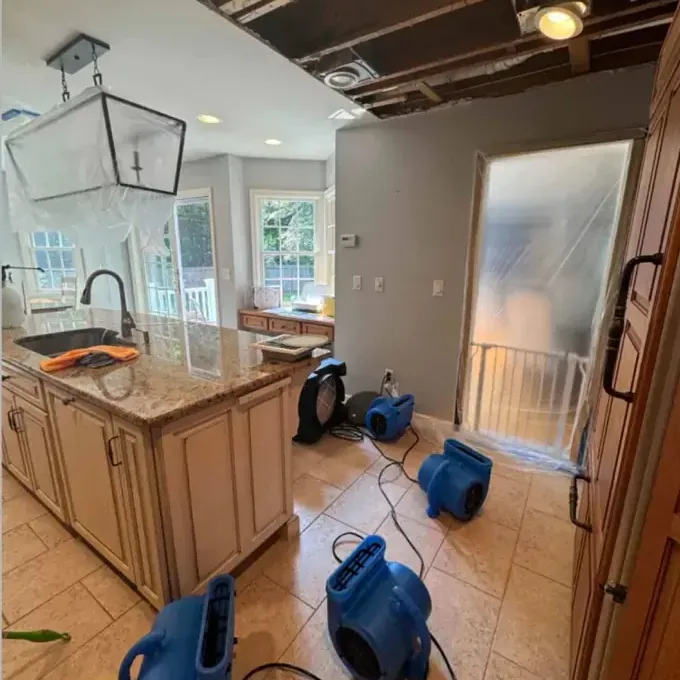
Insulation and framing need an individual material record
Opening a damaged ceiling can expose several layers at once. The record should identify the ceiling finish, insulation and structural components actually found, then describe their condition.
Photographs before and after removal help explain which materials remain and why another section needs access.
Absorbent layers that obstruct inspection or suitable drying require assessment in their own right. A technician should describe the material and its condition when recommending removal.
This gives the owner something more useful than a general statement that the whole ceiling needs replacement.
Retained framing and adjoining surfaces need repeatable observation points. Marking those locations on a simple sketch helps another technician find the same material during a later visit.
The repair contractor can also use the sketch to understand the shape of the opening and the layers that need reinstatement.
- Identify the layers exposed above the damaged finish.
- Photograph wet insulation before its handling decision.
- Label retained framing locations used for follow up readings.
Drying should reach the cavity before finishes return
Airflow in the room below may leave a concealed area inadequately exposed. The drying setup should address the retained materials within the cavity and explain how moisture is being monitored there.
Equipment placement needs to preserve access for source repair inspection and any required inspection before closure.
The structural drying service follows the response of the exposed assembly over successive visits. A visually lighter stain is only one observation among the material records.
The team should explain what remains wet and whether the arrangement needs adjustment before the ceiling can be repaired.
The homeowner should keep the access area clear until the agreed work is complete. Stored belongings or temporary coverings can obstruct equipment and inspection points.
A usable dry area elsewhere in the home helps household routines continue while the affected room remains prepared for monitoring and finishing work.
The decorating scope should start after the repair handoff
A painter or ceiling installer needs to know which materials were removed, which remain and what source correction was completed. The closing packet should supply that information alongside final condition records.
The contractor can then plan the repair around the actual opening and the surfaces ready to receive new materials.
Photographs of adjacent undamaged trim and ceiling texture can help with the finishing discussion. Those references should be collected before removal when it is safe to do so.
They preserve useful details about the original appearance without delaying work needed to address unstable or wet material.
The owner should retain the roofing or plumbing findings with the interior record. If a later stain appears, that file provides a clear account of the original location and repair.
It also identifies remaining tasks, allowing the household to arrange completion without confusing cosmetic work with source correction or drying.
Questions
Should a bulging ceiling be punctured to release water?
An occupant should leave the surface undisturbed and remain outside the area beneath it. Qualified personnel need to assess the overhead assembly and electrical surroundings before arranging controlled access.
Why might inspection extend beyond the visible stain?
Water can follow concealed components before reaching the finished ceiling. Looking along that route helps identify soaked insulation or framing that a surface photograph cannot show.
What rain information helps the repair professional?
The useful details are when the stain appeared, when dripping occurred and how the visible condition changed. These observations can be compared with findings in the roof space and at the exterior opening.
Can painting begin as soon as dripping stops?
Finish work should follow confirmation of source correction and the condition of the retained ceiling assembly. The repair handoff identifies the materials ready for closure and any tasks still awaiting completion.