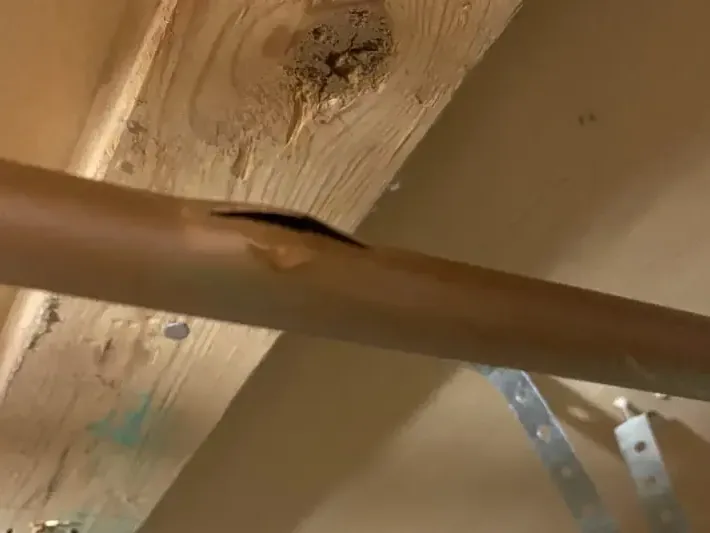
A pipe release during freezing weather creates separate questions about the water supply and the soaked building. Hiram is among the communities served by Paulding County Water, which accepts emergency leak reports at all hours. The homeowner's first useful description identifies the visible leak, whether water remains active and any unsafe room. Source isolation and interior cleanup can then be coordinated around the conditions found.
Key takeaways
- A safe shutoff and an assessment of wet electrical areas come before handling soaked belongings.
- Utility service arrangements and an interior plumbing repair need separate confirmation.
- Water inside a wall can reach floor edges beyond the visible pipe opening.
- A dry route to plumbing access helps protect occupants during the repair.
- Supply restoration should be coordinated with inspection of the repaired connection and surrounding materials.
Cold weather affects the supply appointment too
Paulding County Water leaves water off at the curb stop during freezing temperatures and does not set meters under those conditions. Those service restrictions matter when a damaged property also needs a service arrangement.
An owner should include that requirement in the utility conversation alongside the description of any visible water escape.
An interior plumber and a utility representative may be working on different parts of the problem. The repair notes should identify which connection needs attention and who is arranging access.
Recording the instructions from each party helps prevent a supply change from being mistaken for completion of the indoor repair.
Hiram Park includes houses and townhouses, so a repair visit should begin with the actual property layout and the occupant's access arrangements. The owner can describe a visible valve or equipment space without entering a hazardous room.
The plumber can then identify an appropriate isolation point and explain the repair sequence.
- State whether the request concerns an active leak or a service appointment.
- Record instructions about restoring the supply.
- Identify who can authorize entry and the plumbing repair.
A clear leak description starts at the visible opening
Water spraying inside a wall, flowing from a ceiling and collecting around a cabinet each give a different starting point for inspection. The report should describe what the occupant actually saw and when it changed.
A photo taken before safe isolation can be helpful when the flow has stopped by the time the repair professional arrives.
Residents should leave wet switches, outlets and powered equipment alone. A room with sagging material or water near electrical components needs assessment before contents are retrieved.
Keeping the household outside that space preserves a clear work area and lets qualified personnel decide how access can be established.
The burst pipe water damage service follows the escaped water after the source is addressed. That inspection includes the opening around the pipe, the surfaces below it and any connected rooms.
The owner receives a more useful scope when the pipe repair and the resulting material damage are described separately.
- Describe the direction of visible flow rather than guessing the hidden failure point.
- Note which rooms became wet after the first discovery.
- Keep pets and household traffic away from exposed work areas.
Plumbing access can reveal another wet assembly
Removing a small section of wall for a pipe repair may expose insulation or framing that absorbed water before the leak was noticed. The plumber's opening becomes part of the moisture inspection.
Close photographs should show the exposed materials as well as the repaired connection so the later drying decisions remain understandable.
Water can descend through a cavity and emerge at a different level. Inspectors therefore compare the visible opening with wall bases, floor junctions and lower rooms where the route leads.
The goal is a connected picture of the escape, including material behind intact finishes when inspection indicates that access is needed.
Hiram Park construction spans 2006 to 2022. At an individual home, the assembly found during inspection determines how access and drying are arranged.
Existing repairs, installed finishes and the position of the damaged pipe all belong in that assessment before another section of material is removed.
Water removal should preserve the plumber's work area
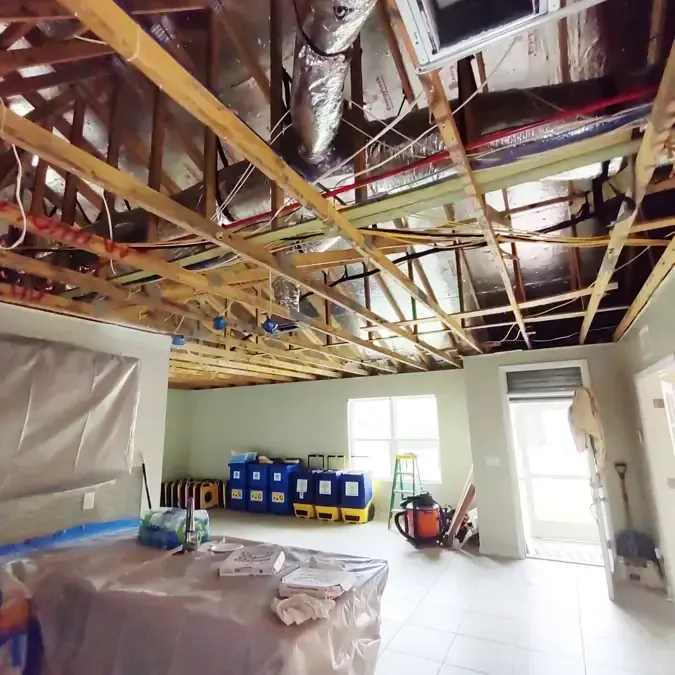
A wet floor around the repair opening can interfere with tools, material handling and safe passage. The water removal crew coordinates its equipment route with plumbing access so workers can reach the connection.
Contents are moved through a planned route after their condition and suitable holding area are established.
Photographs should capture the original floor condition before extraction makes the room look different. The contents list can identify affected rugs, cabinet bases and stored boxes without promising that each item will be retained.
This helps the owner understand why an apparently small pipe failure produced several different cleanup tasks.
Equipment placement should leave the repaired fitting accessible for inspection. A drying machine blocking that location can complicate the next visit, especially when supply restoration is still being arranged.
Clear labels on the work area help everyone distinguish the plumbing access from an opening created only for moisture inspection.
- Reserve space around the repaired fitting for inspection.
- Photograph affected belongings before moving them.
- Keep extraction hoses and repair materials out of the occupant route.
Repair approval and drying completion use different records
The Paulding County Building and Permitting Division issues plumbing permits, and county inspectors inspect work under the permits it issues. The repair professional can check the applicable permit process for the planned work.
Those arrangements should be recorded with the plumbing scope before new finishes conceal the access area.
Drying records describe a different part of the recovery: the condition of the retained building materials. They identify the measured surfaces, equipment placement and changes observed during monitoring.
Keeping those records beside the plumbing documentation gives the owner a complete account of both the source correction and the interior recovery.
A wet wall may need continued attention after the pipe connection is repaired. The structural drying plan follows the material response and any concealed layers still holding moisture.
The team should explain what needs further monitoring before wallboard, trim or flooring is scheduled for replacement.
Occupancy arrangements should remain workable between visits
Asbury Woods contains houses, while Westwind Townhomes contains townhouses. For any occupied property, the response plan should identify usable rooms and a dry route between them.
The owner can then coordinate everyday access around the rooms that contain exposed cavities, wet contents or active drying equipment.
A written access note can cover entry arrangements, animals in the household and the person receiving daily updates. These details prevent routine monitoring from disrupting a plumbing appointment or blocking an essential doorway.
Changes to equipment placement should be explained so occupants understand which spaces remain part of the work zone.
Belongings retrieved from a dry area should stay outside the wet work area. If another item is needed from an affected room, the crew can decide how to retrieve it safely.
This keeps household needs visible without asking an occupant to navigate exposed materials or electrical concerns during an ongoing repair.
- Agree on a dry entrance and usable household rooms.
- Assign a contact for access changes and inspection updates.
- Keep personal items away from equipment intake and discharge areas.
Supply restoration needs an observed handoff
Before water service resumes, the responsible repair professional should confirm the condition of the repaired section and the planned restoration procedure. The owner should know who is carrying out that step.
Any new water at the connection or surrounding surface needs to be reported while the area remains accessible.
The cleanup record can then identify the time of the plumbing handoff and whether the wet boundary changed afterward. This helps distinguish residual moisture in an existing assembly from another active release.
Monitoring can continue at labeled locations without losing the sequence of the original event and repair.
At completion, the owner should receive the plumbing documents, final material record and a list of remaining finish work. Keeping those together makes later questions easier to answer.
The next contractor can see exactly where access was created and which surfaces are ready for the planned repair.
Questions
Who needs to know if water remains active indoors?
The plumbing professional needs the location and current behavior of the release. A utility service request should also include relevant supply concerns so the people handling isolation and service arrangements receive the right information.
Can a stopped drip leave a wet wall?
Yes. Insulation, framing and adjacent finishes can retain moisture after the pipe stops releasing water. An inspection of those layers determines the drying work still needed around the repaired opening.
Should an occupant operate a wet electrical switch?
The affected area should remain undisturbed until qualified personnel assess the electrical hazard. A safe place outside the room is the appropriate location for photographs and the first conversation about access.
What should accompany a request to close the wall?
The contractor needs the applicable repair inspection information and a material condition record for the cavity. Together they explain the completed pipe work and the status of the surfaces that will be concealed.